Hearing loss is a disability that can significantly impact an individual’s ability to communicate and interact in the workplace. Accommodations and support are essential to ensure that individuals with hearing loss can participate fully and effectively in their professional environments. Here are some considerations and accommodations that can be helpful:
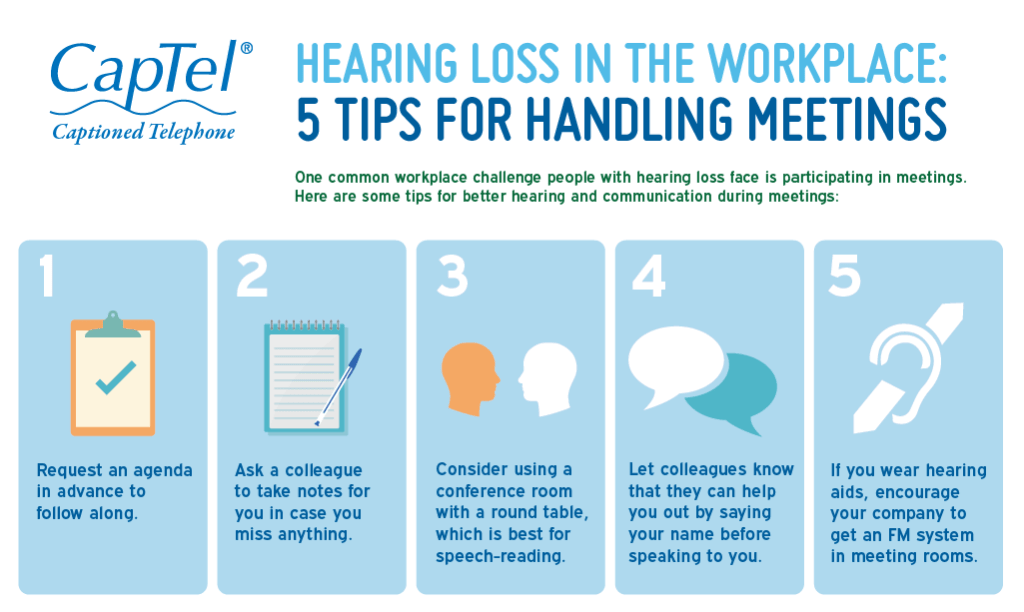
- Assistive Listening Devices: Provide employees with assistive listening devices such as hearing aids or cochlear implants to enhance their hearing abilities.
- Communication Access: Ensure that communication within the workplace is accessible. This can be achieved through various means, including providing written materials or using visual aids during presentations and meetings. Implementing closed captioning or real-time transcription services can also be beneficial.
- Environmental Modifications: Make adjustments to the workplace environment to minimize background noise and enhance sound transmission. This can include using sound-absorbing materials, installing carpeting, or using cubicle partitions to reduce noise distractions.
- Visual Alerts: Implement visual alert systems to supplement auditory signals. For example, using flashing lights for fire alarms or visual notifications for incoming phone calls or other important announcements.
- Workplace Policy and Training: Develop policies that promote inclusivity and educate employees about hearing loss and effective communication strategies. This can include providing training on how to effectively communicate with individuals who have hearing loss, raising awareness about the impact of loud noises on hearing, and encouraging a supportive and understanding work culture.
- Flexible Work Arrangements: Consider flexible work arrangements such as remote work or modified schedules to accommodate specific needs related to hearing loss. This can help reduce the challenges posed by noisy environments or improve access to necessary assistive technologies.
- Designated Quiet Spaces: Create designated quiet spaces where employees can go to have important conversations or work without distractions.
- Collaboration and Support: Foster a supportive and inclusive work environment by encouraging collaboration and empathy among employees. Encourage open communication and provide support mechanisms for employees with hearing loss, such as mentoring programs or access to counseling services.
It’s important to note that the specific accommodations needed may vary depending on the individual and the nature of their hearing loss. Employers should engage in an interactive process with employees to identify their needs and determine appropriate accommodations. Additionally, it’s crucial to stay updated on local laws and regulations regarding disability accommodations in the workplace to ensure compliance.
 Nursing Notes