

Waardenburg syndrome is a rare genetic condition caused by a group of genetic conditions that cause congenital hearing loss, pigmentation deficiencies, and specific facial features.
Common Features
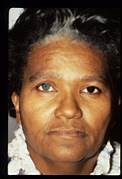
Includes bright blue eyes or one blue and one brown eye, a white forelock, or patches of light skin.
Causes
Mutations in genes affecting neural crest cells during embryonic development, with PAX3, MITF, and SOX10 being notable ones for different types.
Pathophysiology
Waardenburg syndrome (WS) is a genetic disorder caused by mutations in genes involved in the development and migration of neural crest cells during embryogenesis. The main genes implicated are PAX3, MITF, SOX10, EDNRB, and EDN3. These mutations lead to abnormal development of melanocytes, resulting in pigmentation abnormalities and hearing loss. The specific pathophysiology varies by WS type:
- WS1 and WS3: Primarily caused by PAX3 mutations, affecting melanocyte development and migration
- WS2: Mostly due to MITF mutations, impacting melanocyte survival and function
- WS4: Involves SOX10, EDNRB, or EDN3 mutations, affecting both melanocytes and enteric neurons
The abnormal melanocyte development and distribution leads to the characteristic pigmentary changes and sensorineural hearing loss seen in WS.
Congenital Transmission:
Waardenburg syndrome is primarily inherited in an autosomal dominant pattern, meaning only one copy of the altered gene is needed to cause the disorder. However, the specific genetic transmission can vary depending on the type of Waardenburg syndrome:
- Waardenburg syndrome types 1 and 3:
- Caused by mutations in the PAX3 gene
- Inherited in an autosomal dominant pattern
- A person with the mutation has a 50% chance of passing it on to each child
- Waardenburg syndrome type 2:
- Most commonly caused by mutations in the MITF gene, but can also be caused by mutations in other genes like SOX10
- Inherited in an autosomal dominant pattern
- Some cases may occur sporadically due to new mutations
- Waardenburg syndrome type 4:
- Can be caused by mutations in several genes including SOX10, EDNRB, and EDN3
- Inheritance pattern can vary:
- SOX10 mutations are typically autosomal dominant
- EDNRB and EDN3 mutations are usually autosomal recessive, requiring two copies of the altered gene
Key points about the congenital transmission of Waardenburg syndrome:
- Variable expressivity: The severity and specific features can vary widely, even within the same family.
- Incomplete penetrance: Some individuals who inherit the mutation may not show symptoms.
- Sporadic cases: In some instances, the syndrome can occur due to new mutations in individuals with no family history of the disorder.
- Genetic testing: Can be used to confirm the diagnosis and identify the specific gene mutation, which is helpful for genetic counseling.
- Prenatal testing: Is possible for some types of Waardenburg syndrome if the specific mutation in the family is known.

Autosomal dominant inheritance is a pattern of genetic transmission where:
- Only one copy of the mutated gene is needed to cause the disorder or trait.
- An affected individual has a 50% chance of passing the mutated gene to each offspring, regardless of the child’s sex.
- Both males and females are equally likely to be affected and to transmit the trait.
- Expressivity can be variable, with affected individuals showing different degrees of severity.
Signs and Symptoms:
The main clinical features of WS include:
- Pigmentary abnormalities:
- White forelock (poliosis)
- Premature graying of hair
- Heterochromia iridis (different colored irises)
- Patchy depigmentation of skin (leukoderma)
- Hearing loss: Congenital sensorineural hearing loss, usually bilateral
- Craniofacial features:
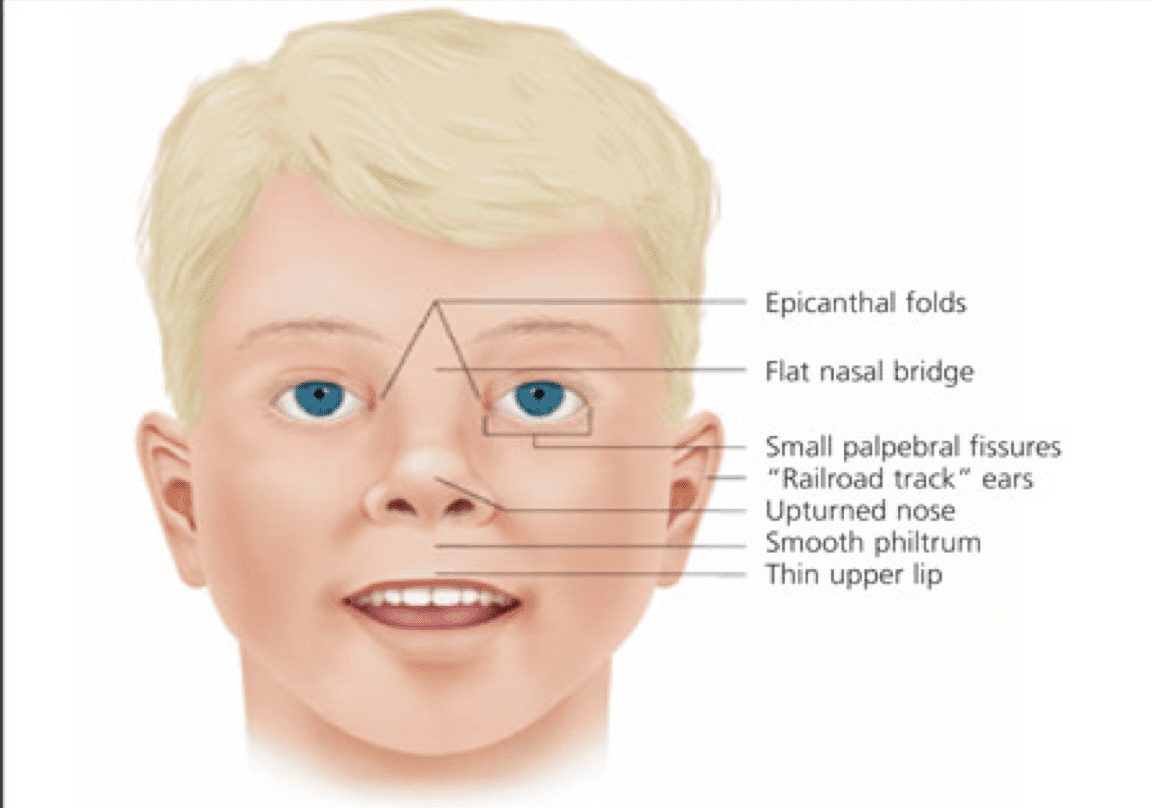
- Dystopia canthorum (wide-set inner corners of eyes) in WS1 and WS3
- Broad nasal root
- Synophrys (connected eyebrows)
- Additional features in specific types:
WS4: Hirschsprung disease is a condition that affects the large intestine (colon) and causes problems with passing stool. The condition is present at birth (congenital) as a result of missing nerve cells in the muscles of the baby’s colon. Without these nerve cells stimulating gut muscles to help move contents through the colon, the contents can back up and cause blockages in the bowel.
WS3: Upper limb abnormalities. The upper limbs may appear underdeveloped with flexion contractures, fusion of the carpal bones and sometimes syndactyly
The presentation can be highly variable, even within families.
Treatment Plans:
There is no cure for WS, so treatment focuses on managing symptoms and associated complications:
- Hearing management:
- Early hearing screening and intervention
- Hearing aids or cochlear implants for hearing loss
- Speech and language therapy
- Ophthalmological care:
- Regular eye exams
- Correction of refractive errors
- Monitoring for glaucoma
- Dermatological management:
- Sun protection for depigmented areas
- Cosmetic treatments (e.g., hair dyes, skin camouflage) if desired
- Genetic counseling for affected individuals and families
- Specific management for associated conditions:
- Surgical intervention for Hirschsprung disease in WS4
- Orthopedic management for limb abnormalities in WS3
- Supportive care and developmental assessments, especially for children with hearing loss
References:
- Chen, L., Wang, L., Chen, L., Wang, F., Ji, F., Sun, W., Zhao, H., Han, W., & Yang, S. (2020). Transcript Profiles of Stria Vascularis in Models of Waardenburg Syndrome. Neural Plasticity, 1–9. https://doi.org/10.1155/2020/2908182
- Lee, C., Lo, M., Chen, Y., Lin, P., Hsu, C., Chen, P., Wu, C., & Hsu, J. S. (2022). Identification of nine novel variants across PAX3, SOX10, EDNRB, and MITF genes in Waardenburg syndrome with next‐generation sequencing. Molecular Genetics & Genomic Medicine, 10(12), 1–13. https://doi.org/10.1002/mgg3.2082.
- Sun, F., Xiao, M., Ji, D., Zheng, F., & Shi, T. (2024). Deciphering potential causative factors for undiagnosed Waardenburg syndrome through multi-data integration. Orphanet Journal of Rare Diseases, 19(1), 226. https://doi.org/10.1186/s13023-024-03220-y
- Li, Y., Chen, Y., Sun, Y., Li, S., Dong, L., Li, Z., & Shen, G. (2024). Waardenburg syndrome type 2 with a de novo variant of the SOX10 gene: a case report. BMC Medical Genomics, 17(1), 104. https://doi.org/10.1186/s12920-024-01877-9
- Lin, P.-A., Hung, J.-H., & Huang, Y.-H. (2024). Heterochromia caused by Waardenburg syndrome in a 2-month-old infant. CMAJ : Canadian Medical Association Journal = Journal de l’Association Medicale Canadienne, 196(9), E296. https://doi.org/10.1503/cmaj.231616
 Nursing Notes
Leave a comment