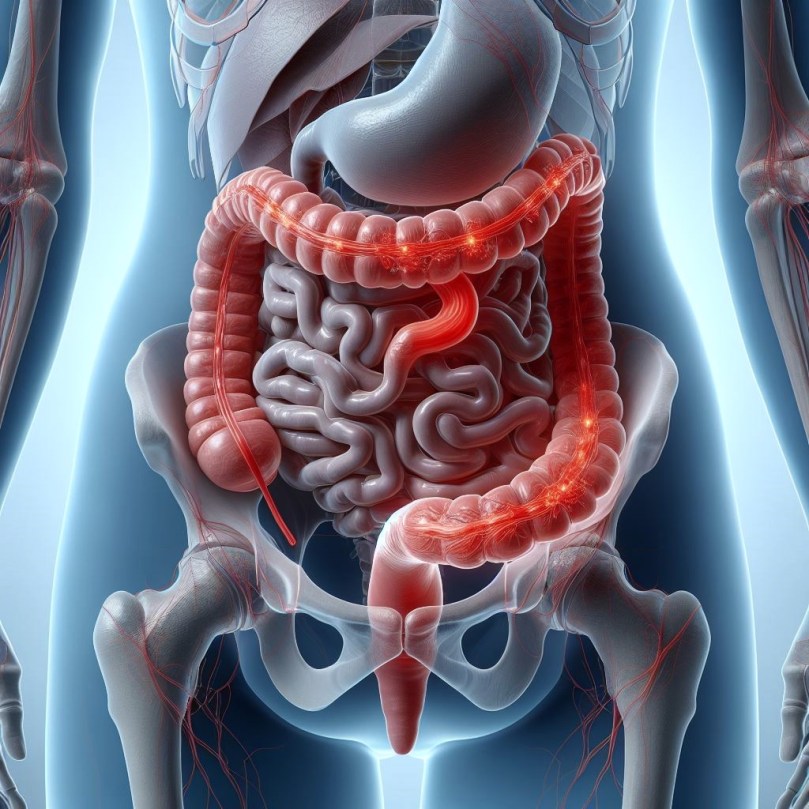
Image created using Bing Image Creator
Crohn’s disease is a chronic inflammatory bowel disease (IBD) characterized by inflammation that can affect any part of the gastrointestinal (GI) tract, from the mouth to the anus. The exact cause of Crohn’s disease remains unclear, but it is believed to involve a complex interplay of genetic, environmental, and immunological factors.
Pathophysiology
- In individuals with a genetic predisposition, an abnormal immune response is triggered, leading to chronic inflammation in the GI tract.
- The immune system, instead of defending against pathogens, mistakenly attacks the healthy cells of the digestive system.
- Crohn’s disease has a genetic component, with certain genetic mutations increasing susceptibility.
- Variations in genes associated with the immune system, such as those involved in the regulation of inflammation, play a role in the development of Crohn’s disease.
- Environmental factors, such as diet, smoking, and exposure to certain microbes, may contribute to the initiation or exacerbation of Crohn’s disease.
- These factors can interact with the genetic predisposition, triggering an inappropriate immune response.
- The gut microbiota, which consists of trillions of microorganisms, plays a crucial role in maintaining a healthy immune system and intestinal barrier.
- Alterations in the composition and function of the microbiota are observed in individuals with Crohn’s disease, suggesting a role in disease pathogenesis.
- Chronic inflammation in Crohn’s disease is characterized by the infiltration of immune cells, particularly T cells and macrophages, into the intestinal wall. This immune response leads to the release of pro-inflammatory cytokines, perpetuating the inflammatory process. However, the interplay between cellular and inflammatory mediators is complex and not fully understood.
- A distinctive feature of Crohn’s disease is the formation of granulomas, which are collections of immune cells.
- Granulomas can affect multiple layers of the intestinal wall and contribute to tissue damage and scarring.
Signs and Symptoms of Crohn’s Disease:
- Abdominal Pain:
- Persistent or intermittent and unpredictable abdominal pain, often in the lower right quadrant, is a common symptom.
- Diarrhea:
- Chronic diarrhea, sometimes bloody, is a hallmark symptom of Crohn’s disease due to inflammation and disruption of normal bowel function.
- Weight Loss:
- Malabsorption, reduced appetite, and chronic inflammation contribute to weight loss in many individuals.
- Fatigue:
- Ongoing inflammation and the body’s response to chronic disease can lead to fatigue and weakness.
- Fever:
- Systemic symptoms, including fever, may occur during active disease flares.
- Extraintestinal Manifestations:
- Crohn’s disease can affect organs outside the digestive system, leading to manifestations such as arthritis, skin rashes, and eye inflammation.
- Perianal Complications:
- Fistulas, abscesses, and skin tags around the anus may occur in some individuals, leading to discomfort and complications.
- Nutritional Deficiencies:
- Malabsorption and reduced food intake can result in nutritional deficiencies, affecting various organ systems.
- Intermittent Flares and Remissions:
- Crohn’s disease is characterized by periods of exacerbation (flares) and periods of reduced symptoms (remissions).
Understanding the complex pathophysiology of Crohn’s disease is essential for developing targeted treatments that address the underlying causes of inflammation and immune dysregulation. Research into Crohn’s disease continues and new associations or understanding are discovered regularly. Therapeutic approaches often include immunosuppressive medications, anti-inflammatory drugs, and, in severe cases, surgical interventions to manage complications.
References
Fradkov, E., Sheehan, J., Cushing, K., & Higgins, P. D. R. (2022). Efficacy of Ustekinumab in Crohn’s Disease With and Without Concurrent Autoimmune Skin Disease. Inflammatory Bowel Diseases, 28(6), 895–904. https://doi-org.proxy.mul.missouri.edu/10.1093/ibd/izab201
Gilca-Blanariu, G.-E., Trifan, A., Ciocoiu, M., Popa, I. V., Burlacu, A., Balan, G. G., Olteanu, A. V., & Stefanescu, G. (2022). Magnesium—A Potential Key Player in Inflammatory Bowel Diseases? Nutrients, 14(9), 1914. https://doi-org.proxy.mul.missouri.edu/10.3390/nu14091914
Lee, B., Dane, B., & Katz, S. (2022). Current and Emerging Approaches to the Diagnosis and Treatment of Crohn’s Disease Strictures. Gastroenterology & Hepatology, 18(4), 186–195.
DISCLAIMER
The Site may contain (or you may be sent through the Site) links to other websites or content belonging to or originating from third parties or links to websites and features in banners or other advertising. Such external links are not investigated, monitored, or checked for accuracy, adequacy, validity, reliability, availability, or completeness by us. WE DO NOT WARRANT, ENDORSE, GUARANTEE, OR ASSUME RESPONSIBILITY FOR THE ACCURACY OR RELIABILITY OF ANY INFORMATION OFFERED BY THIRD-PARTY WEBSITES LINKED THROUGH THE SITE OR ANY WEBSITE OR FEATURE LINKED IN ANY BANNER OR OTHER ADVERTISING. WE WILL NOT BE A PARTY TO OR IN ANY WAY BE RESPONSIBLE FOR MONITORING ANY TRANSACTION BETWEEN YOU AND THIRD-PARTY PROVIDERS OF PRODUCTS OR SERVICES.
PROFESSIONAL DISCLAIMER
The Site cannot and does not contain medical/health advice. The medical/health information is provided for general informational and educational purposes only and is not a substitute for professional advice. Accordingly, before taking any actions based upon such information, we encourage you to consult with the appropriate professionals. We do not provide any kind of medical/health advice. THE USE OR RELIANCE OF ANY INFORMATION CONTAINED ON THE SITE IS SOLELY AT YOUR OWN RISK.
AFFILIATES DISCLAIMER
The Site may contain links to affiliate websites, and we receive an affiliate commission for any purchases made by you on the affiliate website using such links.
We are a participant in the Amazon Services LLC Associates Program, an affiliate advertising program designed to provide a means for us to earn advertising fees by linking to Amazon.com and affiliated websites.
This disclaimer was created using Termly’s Disclaimer Generator.
 Nursing Notes