Human bodies are comprised mostly of water. Water is essential to maintain transmission of nerve impulses and nutrients, maintain blood pressure, regulate temperature, and remove waste. While infants have high water content, water declines in our bodies as we age. Older adults are susceptible to dehydration. Dehydration can be the result of a lack of fluid intake or high-water loss. Low water intake results from drinking too little or drinking liquids with caffeine or carbonation and not enough tap or bottled water. Water loss occurs due to blood loss, vomiting, or diarrhea. A loss of total body water is defined as dehydration.
“By the time an older adult feels thirsty, that’s already an indication of early dehydration.”
Anne Vanderbilt, CNS
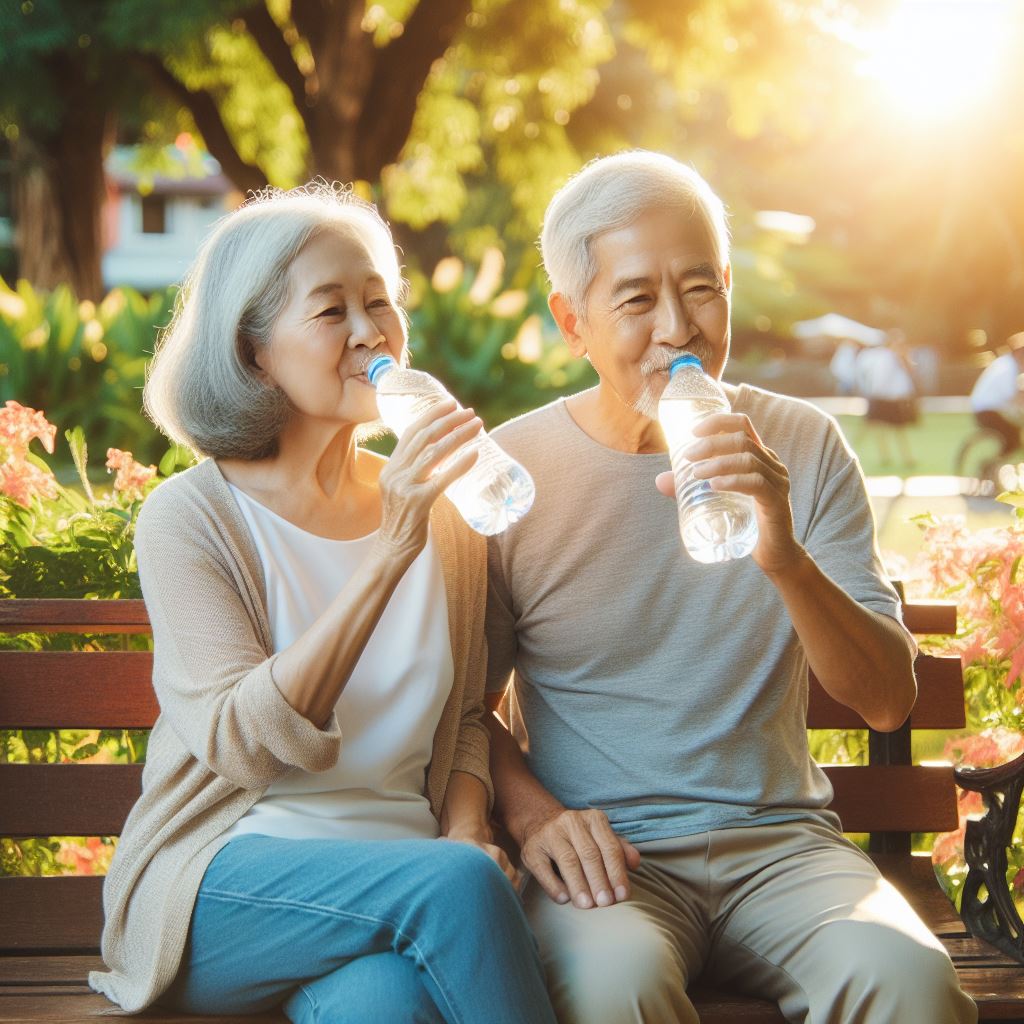
Image Created with Bing Image Creator
Studies have found that older adults more dependent on others are at higher risk for dehydration than those who are independent. Water intake is counted when a person ingests fluids of any kind, although water with nothing added is the best choice. An older adult can also obtain more water input by ingesting foods with higher water content: melon, fruit, vegetables, milk, gelatin, or pudding.
Why do older adults have trouble balancing their fluid status?
The changes in muscle and fat mass decrease the total body water present in older adults. However, other physiological changes just because a person has aged also occur. The primary changes as we age occur in the kidney. The older kidney has less mass and internal scarring, and the vessels are narrower due to a lifetime of narrowing. Due to these changes, the kidney has a more difficult time clearing waste products and concentrating urine. Specifically, the glomerular filtration rate begins to decline after 40 years, and this process accelerates after the age of 65. The glomerular filtration rate has been estimated to decline by at least 50% between the ages of 35-80. When you compare adults at 20 years of age to those between 60-79 years there is a 20% reduction in urine concentrating ability. These changes aggravate dehydration in older adults.
To exacerbate this situation further, older adults have a blunted thirst reflex. As one has declines in cognition, their risk for dehydration even further. People with dementia forget to drink water or enough water. Persons with uncontrolled diabetes are at higher risk for dehydration as well. This is due to the diuretic effect of high blood sugar. When people have urinary incontinence, are traveling, or even have errands or appointments to do, they may self-restrict fluid intake which can have an impact on their fluid status. Other people who may have trouble with their fluid status are people who have trouble swallowing or those in very hot environments.
What do people look like who are dehydrated?
They may look just like you or me. However, older adults often have signs and symptoms that will help you arrive at this diagnosis. If you are dehydrated your urine will be darker yellow, orange, or brown. You want your urine to be light yellow or clear. The signs and symptoms include:
Confusion, crankiness, anxious
Fatigue
Dizziness or loss of coordination
Headache
Dry mouth
Muscle cramps
Flushed dry skin
Cracked dry lips and mouth (only in more extreme cases)
How to Prevent Dehydration?
Drink at least 64 ounces of water a day
Add strawberries or other fruit in your water.
Add cucumbers to your water.
Add sugar-free Kool-Aid or other drink additives.
Drink milk
Popsicles or ice pops
Eat foods with higher water content.
Fruits, especially melon
Vegetables like cucumbers
Gelatin or pudding
Avoid caffeine.
Switch to caffeine-free versions
Still unsure. Here is an app to help you calculate your water intake for each day.
References
Parkinson, E., Hooper, L., Fynn, J., Wilsher, S. H., Oladosu, T., Poland, F., Roberts, S., Van Hout, E., & Bunn, D. (2023). Low-intake dehydration prevalence in non-hospitalised older adults: Systematic review and meta-analysis. Clinical Nutrition, 42(8), 1510–1520. https://doi-org.proxy.mul.missouri.edu/10.1016/j.clnu.2023.06.010
The fountain of youth: Proper hydration is essential for optimal health, but many older adults still don’t drink enough water. (2023). Harvard Men’s Health Watch, 27(12), 4.
Lambert, K., & Carey, S. (2023). Dehydration in geriatrics: consequences and practical guidelines. Current Opinion in Clinical Nutrition & Metabolic Care, 26(1), 36–41. https://doi-10.1097/MCO.0000000000000880

 Nursing Notes